
Carl Palmquist · Stockholm · Booking projects

AI-native shipping for teams that need to move.

Independent product engineer. I design, build, and ship working software, solo. Available for short engagements with companies that want to test, prototype, or launch with AI without waiting six months for a roadmap slot.

What I bring

01

For AI founders looking for a partner

A second pair of senior hands. I've already worked out how to use AI in the build, not just bolt it onto the product. The boring stuff that kills prototypes — security, database, error handling — is handled.

02

For established teams wanting to use AI

Plug AI into what you already have. No rewrite. The way I work — the rules, the notes, the advisors — stays with your team after I leave. The goal isn't one fast project. It's that the next one is fast too.

03

For commercial teams scaling APIs and partnerships

Eight years on the commercial side. I package what's built into something partners actually buy, run the demos that close, and translate between engineering and business so neither side ships the wrong thing.

04

For all of the above

Two to six week sprints. Working software at the end of every one. Fixed scope and price. If a sprint doesn't produce something usable, that's on me.

About

Carl Palmquist

Hi, I'm Carl.

Eight years across product, partnerships, and engineering. Most recently at Epidemic Sound, where I owned the commercial and client-facing side of a Partner API that scaled from zero to ten million monthly users.

Now I split my time between my own products (Renofine, Produlog) and consulting work. I build, I package, I demo. AI-native, solo, opinionated.

  • Based in Stockholm
  • Available remote
  • Booking new projects

How I build

  • 01

    Plans that stay alive

    Every project has one file with this week's plan, what shipped, what's stuck, and open questions. The AI reads it before every session. Nothing gets lost between days.

  • 02

    Save what you learn

    When the user says “don't do that,” I write it down. When a design choice turns out wrong, I write that down too. The next session reads the notes and skips the same mistakes. The expensive part of working with AI isn't writing the code — it's re-explaining the context every morning.

  • 03

    Rules in plain text

    A short file at the top of every project. Things like: no shortcuts on types. No file longer than 500 lines. Every database change comes with an undo script before it runs. The AI doesn't go off course when the rules are written down.

  • 04

    A board of advisors that doesn't exist

    A CEO, a designer, a tech lead, a small business owner, a homeowner — each one is a small text file describing how they think. Before a big decision the AI asks each one. They argue. I read it and pick. Costs nothing. Catches blind spots a single perspective misses.

  • 05

    Save often. Ship deliberately

    Every change saves to a local copy automatically. Every database change gets verified automatically. But putting it live is always a human decision. The AI never makes the last call.

Selected work

Renofine app

2026

Founder · Product · Engineering

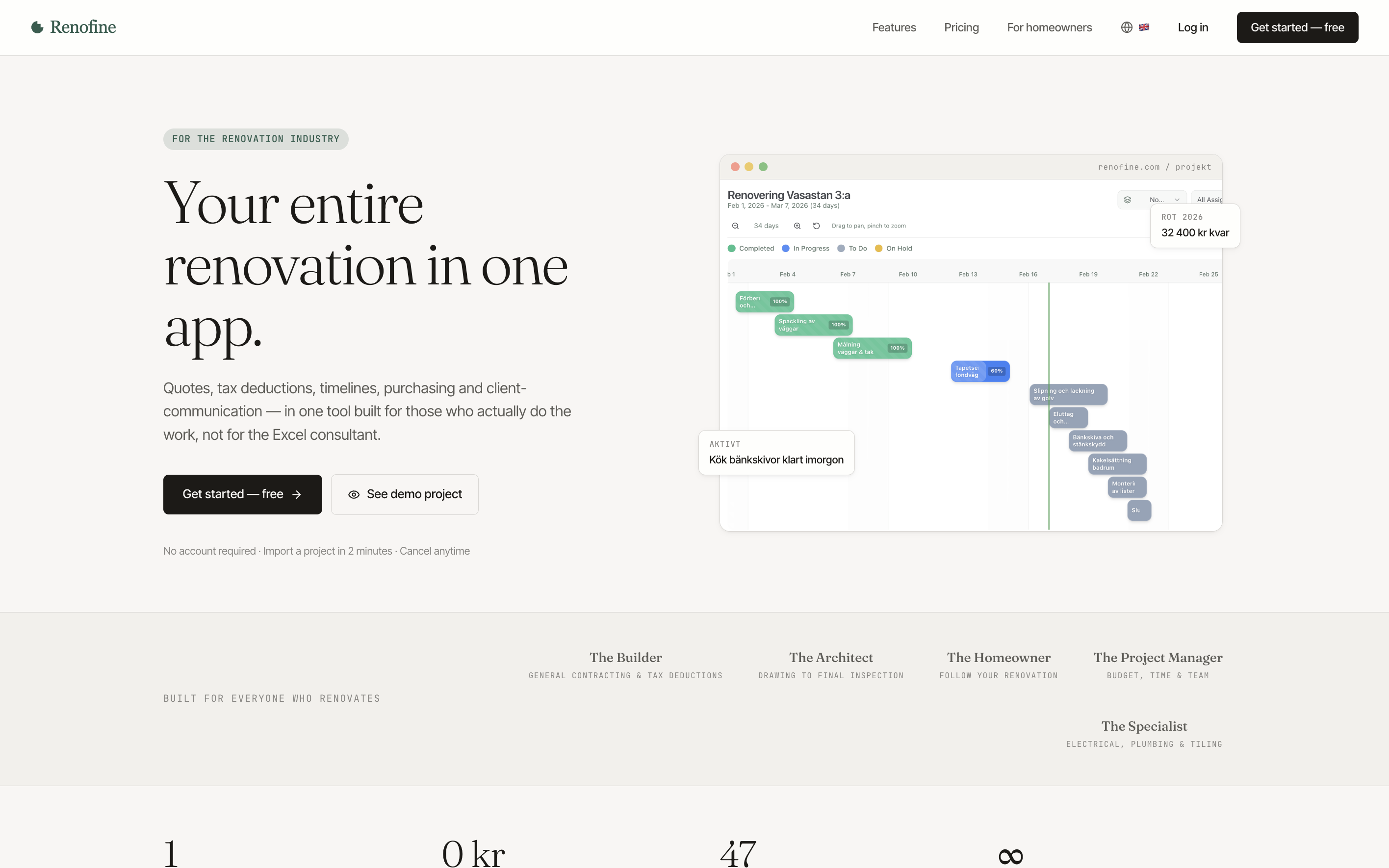
Software for planning and running home renovations. Three kinds of users: the builder, the homeowner running the project, and a homeowner the project lead invites in. Five languages. A drawing tool for floor plans. An AI helper that reads a quote PDF and turns it into a project, rooms, tasks, and a budget. Swedish tax rules baked in.

What the build forced me to figure out

  • Three users, three sets of screens. Each role gets its own screens, not the same screens with parts hidden. Mixing user types in one view is a cost you pay forever.

  • Floor plans in real-world units. The drawing tool works in millimeters, not pixels. Zoom in, zoom out, change a setting — the math still works because the units are real.

  • Locked-down database access. Two simple checks decide what each user can see. Every database change gets tested from two angles: the owner's view and an invited user's view. Catches the most common security bug in this kind of app.

  • AI that suggests, never pushes. Drop a quote PDF in, get a project draft. Ignore every suggestion if you want. The AI offers; the user decides.

  • Five languages kept in sync. English is the source. Swedish is required. The others are best-effort. No raw text hardcoded into the screens, ever.

Built with — React and TypeScript for the screens. Supabase for the database, login, and file storage. Konva for the drawing tool. Cloudflare to host it. Claude and OpenAI for the AI helpers.

Produlog dashboard

2026

Founder · Product · Engineering

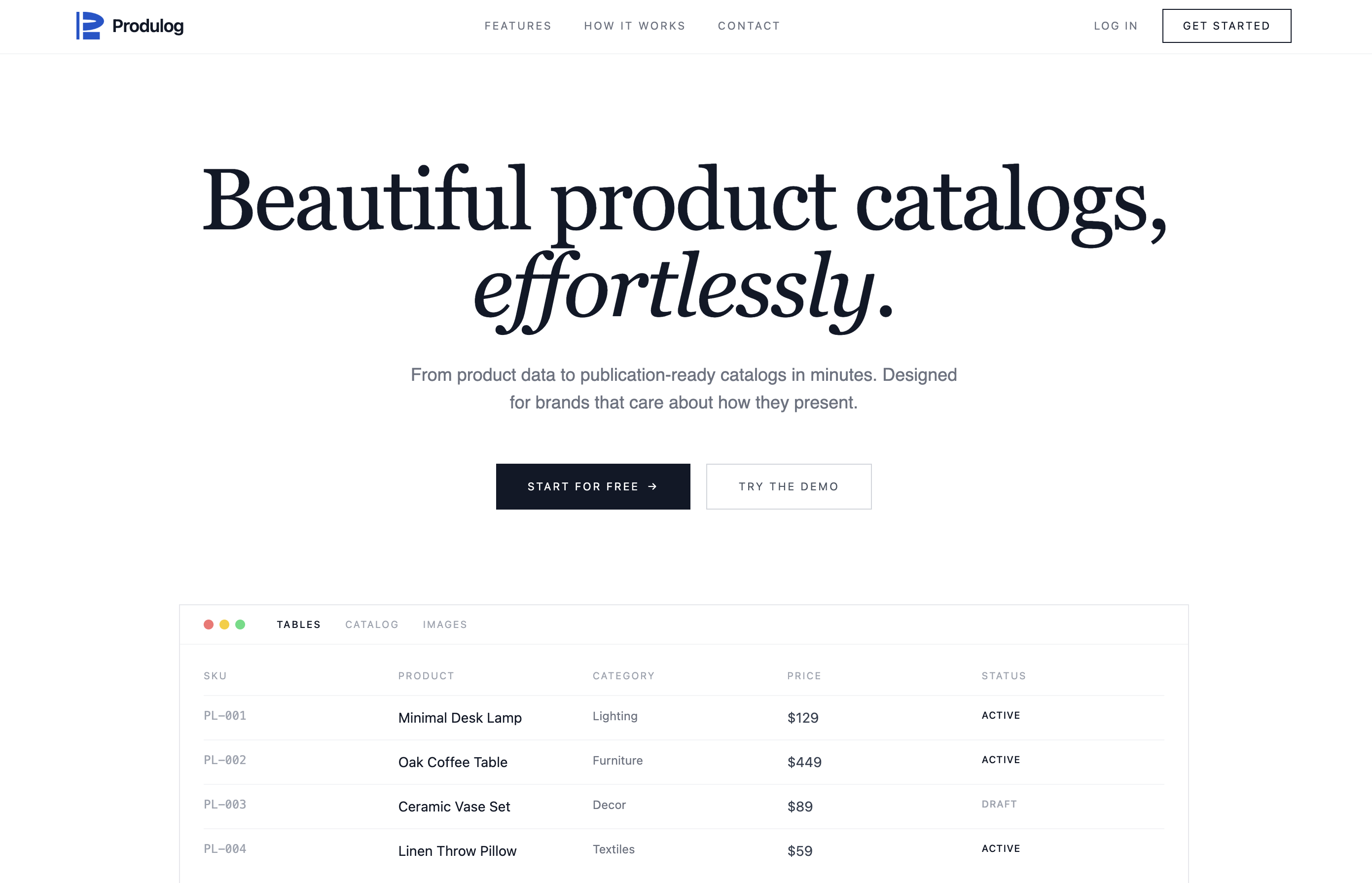
Turns product photos and raw data into ready-to-publish catalogs for beauty, fashion, and consumer goods. The work that used to take a small team a week — sorting images, writing descriptions, formatting for every sales channel — runs in minutes.

What this build is about

  • AI handles the boring 80% of a product description. The last 20% is brand voice and stays human.

  • Every output is editable in one click. The cheapest fix for "AI got it wrong" is making it easy to fix.

  • One source, many channels. Same product data flows out as a webshop entry, a spec sheet, a wholesale PDF.

Built with — React and TypeScript for the screens. Supabase for the database, login, and file storage. Cloudflare to host it. Claude and OpenAI for the AI helpers.

API integration illustration

0 → 10M MAU

API Partnerships & Client Success Manager · 2022 — 2025

Epidemic Sound — Partner API

2022 — 2025

The Partner API powers Epidemic Sound's integrations across creator tools and editing platforms. I owned the commercial and customer-facing side of the platform — packaging, partner deals, demos, and onboarding — alongside the product and engineering team that built it.

What the role actually meant

  • Commercial packaging. Translated technical capability into pricing tiers, contract terms, and value propositions partners could understand and buy.

  • Demos that closed. Live walkthroughs with platform leads at editing tools, content platforms, and creator software. Knowing the product end-to-end meant I could answer technical questions on the spot, without escalation.

  • API strategy. Decided what shipped, what didn't, and what partners had to wait for. Said no to a lot of feature requests so the API stayed sharp.

  • Customer success at scale. Onboarded partners from cold inbound to multi-million-user integrations. The companies who scaled with us did because the partnership worked, not because the API alone did.

  • The bridge between commercial and engineering. Translated partner pain into engineering work, and engineering trade-offs back into language commercial leaders understood. That's where most API platforms fail.